
Introducing New Workbook: I Always Put Myself Down | Grid Society
- E. Lee

- 2 days ago
- 4 min read

Today marks the exciting launch of the 4th workbook in the Grid Society™ Pattern Recognition Collection™.
Be among the first to explore I Always Put Myself Down and discover a structured way to recognise the recurring patterns of negative self-talk, self-criticism, and limiting beliefs that keep you doubting yourself, minimising your achievements, and holding yourself back.




🟠 What Is the Pattern Recognition Collection™?
The Pattern Recognition Collection™ is a growing library of downloadable self-reflection workbooks designed to help you recognise recurring patterns in your thoughts, behaviours, relationships, and everyday life.
🟠 Negative Self-Talk Can Become Your Normal
Constant self-criticism can slowly become your default way of thinking. You begin minimising your achievements, focusing on your mistakes, doubting your abilities, and speaking to yourself in ways you would never speak to anyone else.
Over time, these recurring thoughts can quietly shape your confidence, decisions, and the way you see yourself.
🟠 Recognise the Hidden Patterns
Instead of trying to silence every negative thought, each volume focuses on one recurring internal conversation.
This workbook explores the patterns behind constantly putting yourself down, helping you recognise the habits, beliefs, and thought processes that keep your inner critic in control.
By identifying what we at Grid Society™ call Grey Thinking, it becomes easier to interrupt old patterns, build self-awareness, and create healthier ways of responding.
🟠 One Thought at a Time
Focusing on one recurring internal conversation at a time makes lasting change feel more achievable.
As you begin recognising the patterns behind your self-talk, you can gradually replace automatic self-criticism with greater clarity, confidence, self-compassion, and emotional resilience.

The Collection Continues...
Built around the Grid Society Concept™
⬇︎
The Pattern Recognition Collection™ is built around the signature Grid Society™ concept, the Universal Grid. A concept we have successfully used with counsellors, educators, colleges, universities, and professionals.
The key elements of the concept, the Grey Grid, the Green Grid, and the Orange Grid, make the process of dissecting problems more engaging. They also make patterns of thought easier to recognise and personal growth easier to measure.
The Philosophy
⬇︎
The philosophy behind every workbook is simple: The sooner a pattern is recognised, the sooner it can begin to change.
The 4th Release
⬇︎
Constantly putting yourself down can become so familiar that you no longer notice it. Small mistakes feel bigger than they are, achievements are dismissed, and your inner critic begins shaping how you see yourself. Volume 4 helps you recognise these recurring patterns before they become your normal way of thinking.



Our Workshops brought us here...
It Started in Our Workshops
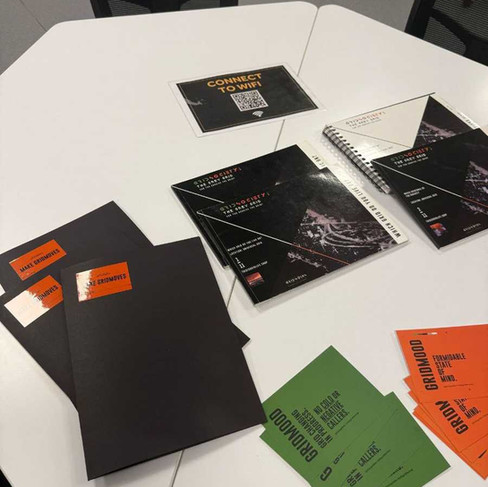
The ideas behind the Pattern Recognition Collection™ grew from the conversations we had while delivering Grid Society™ workshops.
As participants worked through our activities and shared their experiences, the same internal conversations kept appearing. Whether the topic was comparison, people-pleasing, negative self-talk, self-doubt, or recurring patterns of thinking, it became clear that many people were struggling with patterns they had never stopped to recognise.
These were not isolated experiences. They were recurring patterns that quietly shaped people's decisions, relationships, confidence, and everyday lives.



From Workshop to a New Framework
Building on the signature Grid Society™ concepts at the heart of our workshops, we wanted to create something people could continue using long after each session had ended.
That led us to develop the Pattern Recognition Framework™, a practical way to recognise recurring thoughts, behaviours, and patterns, helping people return to them whenever those same internal conversations reappeared.
3 Ways to Use Volume 4:
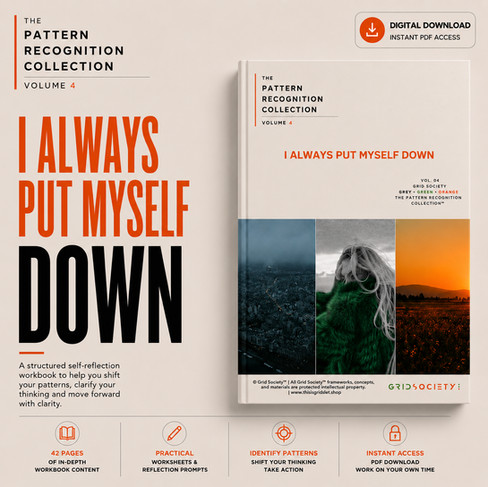
I Always Put Myself Down



The Ghosting Pattern
How People Use It:
1. Flexible Time: A quick 15-minute self-reflection tool whenever you find yourself putting yourself down, doubting your abilities, or focusing on your mistakes.
2. Interrupt the Spiral: Return to the Life on the Universal Grid™ sections whenever your inner critic, self-doubt, or negative self-talk begins to take over.
3. Track Your Progress: An immersive workbook with a mindset progress tracker, guided reflection activities, and practical prompts to help you recognise recurring patterns of negative self-talk and build a healthier relationship with yourself over time.
This is definitely for you if you...
RECOGNISE THESE PATTERNS?
Constantly criticise yourself, even when you have done your best.
Find it difficult to accept compliments or acknowledge your achievements.
Focus on your mistakes while overlooking your progress.
Feel like you are never good enough, no matter what you accomplish.
Speak to yourself more harshly than you would ever speak to someone else.


The Workbook Collection is growing...
This is just the beginning...
I Always Put Myself Down is the 4th volume in the Pattern Recognition Collection™, exploring one of the most common recurring patterns of negative self-talk and self-criticism that can quietly shape your confidence, decisions, and the way you see yourself.
Every few weeks, a new volume will be added to the collection, each one exploring a different recurring pattern, behaviour, or internal conversation.
The question is not whether another volume is coming; it is whether your pattern will be next.

The Grid Society™ concept was created by E. Lee and Dr. N. Michelle to provide a structured framework for understanding thinking patterns and acting on them in real time. The Grid Society™ concept, the Pattern Recognition Collection™, the Universal Grid Map of Patterns™, and all associated frameworks, names, concepts, methodologies, original content, and supporting materials are the intellectual property of Grid Society. All rights reserved.


Comments