
Boundaries: 7 signs you are putting others before yourself too often

Updated: Feb 20
You start the day solving problems that were not even yours.
There is a particular feeling that comes with putting everyone else first.
It does not usually feel dramatic or extreme. It feels responsible.
You wake up already thinking about what other people need from you. Before you have even checked how you feel, you are adjusting your plans, replying to messages, and preparing for conversations. Your attention is outward from the start.

You are efficient. Helpful. Reliable. You get things done.
But beneath that competence is something harder to admit. You cannot remember the last time you made a decision based purely on what you wanted.
You choose what keeps things smooth.
What makes sense.
What avoids tension?
What supports someone else?
And gradually, you leave yourself until last.
Not in one big decision, but in small daily shifts. Your needs get postponed until everything else is handled. Your desires get pushed to the end of the list. Your time becomes whatever is left over once everyone else is satisfied.
By the time you finally turn inward, you are tired. There is less space. The things you once cared about feel further away than they should. Your days look full and responsible. They simply do not feel entirely yours.
These are 7 signs that this pattern may already be shaping your life.
Can you relate?
1. You begin the day in response mode
Before you have asked yourself how you feel or what matters today, you are already replying, organising, and adjusting. Your morning belongs to messages, requests, and expectations. Other people’s priorities set the direction before your own have even been considered. The tension is not just that you are busy. It is that the day has a direction, and it is not yours. When you never pause to orient yourself first, putting others before you becomes automatic.
2. Your schedule reflects obligations more than desires
If you look at your week, most of your time is accounted for by what needs to be done for other people. Meetings, tasks, responsibilities, favours. There is very little space deliberately carved out for what you want. You remain productive and dependable, but your own life is always waiting for “later”. Weeks pass. Then months. And very little of it was actually chosen by you.
3. You make decisions to avoid disruption
You often choose the option that keeps things smooth. The one that avoids tension. The one that accommodates someone else’s comfort. It feels mature and sensible, but over time it creates a quiet frustration you rarely name. Not because anything dramatic happened, but because you cannot remember the last time you chose the option you truly wanted. You prioritise harmony over honesty with yourself.
4. You struggle to articulate what you actually want
When someone asks what you want, the answer feels unclear. You are more fluent in identifying other people’s needs than your own. This is not because you lack desire, but because you have not given yourself regular space to think about it. Over time, you start making decisions based on what seems logical or expected, rather than what actually feels right.
5. Rest feels earned, not essential
Time for yourself only happens once everything else is handled. You treat your own mental space as a reward rather than a priority. The problem is that everything else is never fully handled. There is always one more request, one more task, one more person who needs something. By the time you finally allow yourself to slow down, you are depleted instead of present.
6. You finish the day having met expectations but not yourself
You can look back and see that you were productive, supportive, dependable. But you cannot point to a moment where you consciously chose your own direction. The day was shaped by what was required, not by what you intended. You met expectations, but you did not meet yourself anywhere inside the day.
7. Conversations revolve around others, not you
Over time, people begin to assume you are fine. Phone calls become updates about their lives. You listen, advise, support. You are rarely asked what is happening with you. Not because people do not care, but because you consistently present as the one who does not need space. When you always put yourself last, others stop expecting you to step forward, and your needs slowly disappear from the conversation altogether.
If you recognise yourself in these signs, it is a pattern...

It is a pattern that develops when you consistently prioritise what needs to be done for others before asking what matters to you.
Over time, your attention trains itself outward. You anticipate, adjust, accommodate, and carry. You become highly efficient at meeting expectations. And gradually, your own direction becomes less visible in your decisions.
There is no single moment where everything falls apart. Instead, your life slowly reorganises itself around other people’s needs. Desire becomes secondary to duty.
Days feel full, but not fully yours.
Decisions get made, but not always by you.
Your energy is used, but rarely directed.
For many people, that pattern begins in the first ten minutes of the morning.
That is exactly why we created the Grid Society Morning Reset.
Putting others before you rarely begins with a dramatic sacrifice. It begins in the first ten minutes of the day, when you give the world access to you before you have accessed yourself. If you never pause to decide what matters to you, other people will decide by default.
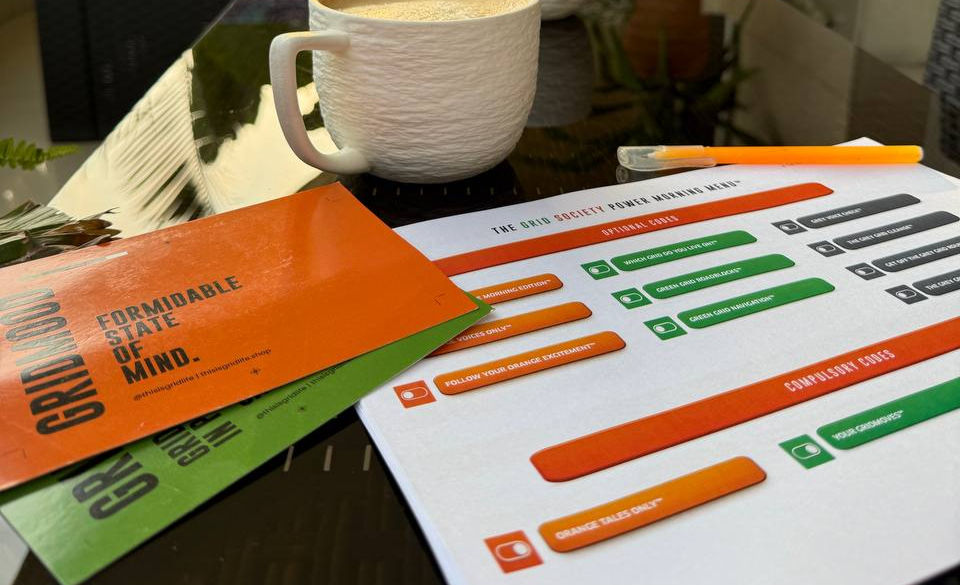
The Grid Society Morning Reset interrupts that pattern. It creates a deliberate check-in before messages, before requests, before expectations. It gives you a defined space to name what you need, what you want, and what direction you are choosing before anyone else’s priorities shape your day.
5 minutes. 10 minutes. That is enough to change the direction of the day. Enough to choose your priorities before responding to someone else’s. Enough to stop your desires slipping quietly to the bottom of the list. Enough to prevent another day from being shaped entirely around other people.
When you begin your day there, you do not stop being helpful. You stop being last. You are no longer reacting to everyone else first. You are choosing yourself first.
GRID SOCIETY
presents
THE MORNING RESET
Harness your internal power daily
INSTANT ACCESS WORKSHOP

The Grid Society Morning Reset – Start Now!
✔ Instant access, lifetime use
Start immediately and return to it whenever you need it. No subscriptions. No expiry.
✔ Guided workshop format
Clear, structured video guidance so you know exactly how to use each tool.
✔ Structured workbook included
Map, track and organise your thoughts, not just think about them.
✔ Adaptable to your mood
Choose the tool that fits how you wake up instead of forcing the same routine every day.
✔ Clear, simple structure
No planning required. Open it and begin.
✔ Flexible timing
5 minutes, 15 minutes, or 50 minutes when you want to go deeper.
✔ Use anywhere
At home, in a café, travelling, or between meetings.
Use our MORNING RESET wherever you are...
The Grid Society Morning Reset is flexible. Use it wherever you are, at home, in a café, on a flight, in a hotel, on holiday, or during quiet time to yourself.
At the cafe


Comments