
How do I use the Grid Society concept & framework for personal development?

Updated: Apr 14
The Grid Society Framework™
The Grid Society Framework™ is used for personal development by helping you recognise your thinking and move it forward with structure.
It is built on a unique approach that combines a concept you can recognise with a structured framework you can use in real time.
You move your thinking through three structured stages:
(Grey) Recognising mental overload
(Green) Organising your thoughts
(Orange) Building clear direction
This allows you to see where you are, understand what is happening, and take clear action instead of staying stuck in loops.
It uses guided writing tools and structured thinking methods to turn overthinking into clear decisions and consistent action.
Concept Definition:
Grid Society is both a concept and a structured framework.
The concept helps you recognise your thinking as it is happening. The framework shows you exactly how to move it forward.
Grey (overload)
Green (organisation)
Orange (direction)
Most personal development gives you ideas, advice, or motivation.
Grid Society gives you a way to recognise your mind and a structured process to act on it.
This is what allows you to organise your thinking, make decisions, and respond clearly in real situations, not just reflect on them afterwards. This is what makes the Grid Society Framework™ both memorable as a concept and usable as a structured approach to personal development.
The real problem people face

If you are asking how to use the Grid Society Framework™, you are likely at the point where thinking things through in your head is no longer working.
You might find yourself calling your friends, going over the same situation again and again, trying to get clarity but still feeling unsure. You might scroll on social media, look for advice on TikTok, watch videos on YouTube, or piece things together from different sources, hoping something clicks.
In the moment, it can feel helpful. But when it comes to making decisions or handling real situations, your thinking still feels unclear, inconsistent, or reactive.
The issue is not that you are not trying to understand yourself. It is that your thinking is happening without structure.
Without a clear way to recognise what is happening in your mind and organise it, nothing fully sticks. You reset, repeat, and start again.
The difference with the Grid Society Framework™ is the unforgettable Grid Society metaphor (the map that stays with you). It gives you a way to recognise your thinking in real time, organise it properly, and respond to it more clearly, which is what makes it long-lasting and usable beyond a single moment.
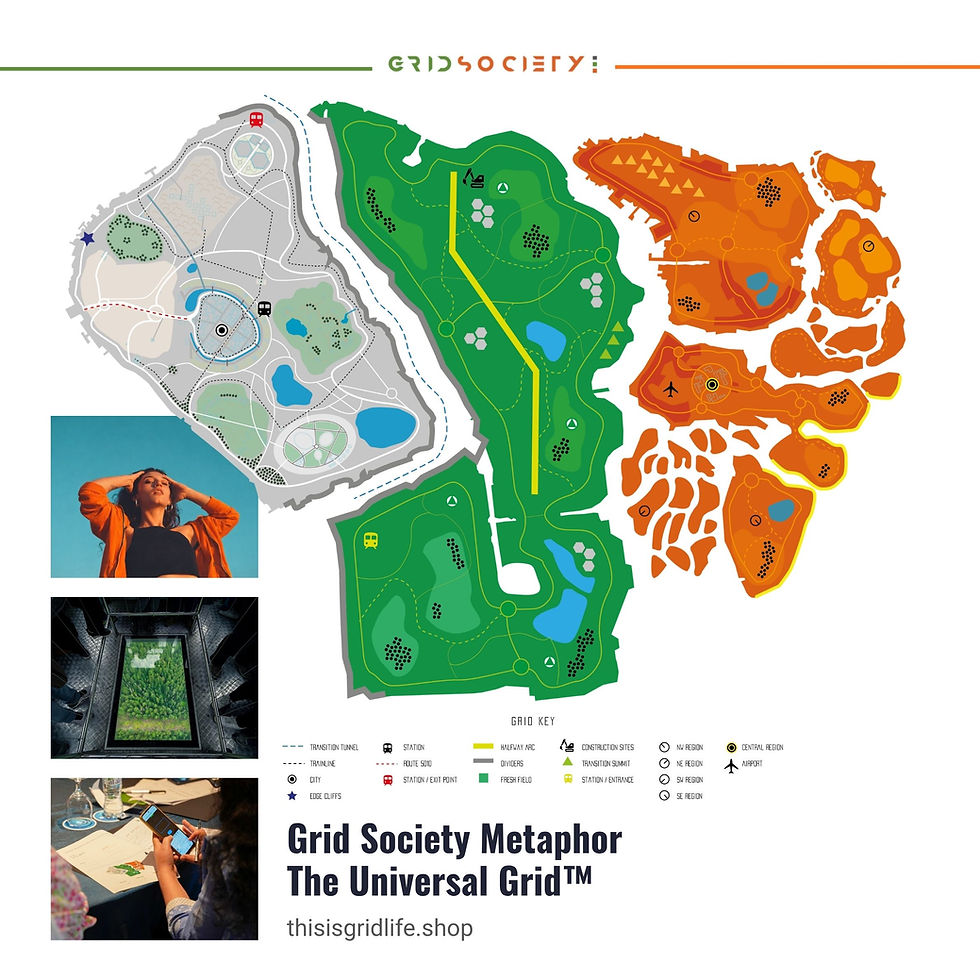
Why Grid Society is different
The Grid Society Framework™ gives you a structured way to move your thinking instead of staying stuck in it.
At the centre of the framework is the Grid, an unforgettable map that shows you where you are mentally and how to move forward.
You work through three core states:
Grey - where your mind feels overwhelmed, pressured, or stuck in loops
Green - where you organise your thinking, break things down, and make decisions
Orange - where you gain clarity, direction, and take aligned action
However, you do not move through these states in the same way every time.
From thinking to direction, the Grid Society Framework™ in action.
The Grid stays the same. The method changes.
The way you move across the Universal Grid depends on what you are dealing with.
Handling your inner critic requires a different process to setting boundaries.Working through a relationship situation is not the same as structuring your morning thinking.
The states remain consistent, but the method changes.
This is where the Grid Society Framework™ becomes powerful.
Each workshop, tool, and exercise gives you a specific way to move through the Grid based on the problem in front of you. You are not guessing how to apply it. You are guided through it.
This means you are not just learning a concept you can loosely apply. You are learning structured ways to think, respond, and move forward depending on the situation.
That is what makes it practical, repeatable, and difficult to replicate without the tools themselves.
How you use the Grid Society Framework™ in real life
Start using the Grid Society Framework™
You can apply the Grid Society Framework™ through structured tools designed to guide your thinking in real situations.
Each tool gives you a specific way to move across the Grid depending on what you are dealing with, so you are not guessing how to apply it.
The Grid Society Framework™ is applied across key areas including:
Inner critic and negative thinking (Grey Voices)
Vision and direction ( Define your Orange Grid )
Boundaries and how to uphold them ( Stay off the Grey Grid )
Structured morning thinking and decision-making ( Morning Reset )
Dating, emotional patterns and recognising red flags
Professional tools for counsellors (Enhance your toolkit)
You can use the framework through 3 formats:
Live Workshops - guided online sessions for individuals, professionals, and counsellors
Instant Access Workshops - self-paced workshops you can start anytime
Journalling Grid Missions - structured workbooks designed to help you organise your thinking and work through specific areas of your life
Each format gives you a clear, step-by-step way to recognise what is happening in your mind, organise it properly, and move forward with direction.
If you want to apply this to your own thinking, you can access the tools here.
How the Grid Society Framework™ is used in real life
These images show how the Grid Society Framework™ is applied in real workshops and downloadable tools.
From London to Dubai, each tool is designed to help you organise your thinking, reduce overthinking, and move into clear action.
This is where personal development becomes usable
Using the Grid Society Concept & Framework™ is not about adding more advice or information. It is about structuring how you think so you can respond clearly in real situations.
When your thinking is structured, you stop looping, second-guessing, and relying on external input. You recognise where you are, understand what needs to happen next, and move forward with direction.
That is what turns personal development from something you think about into something you actually use.
What happens when people apply the Grid Society Framework™
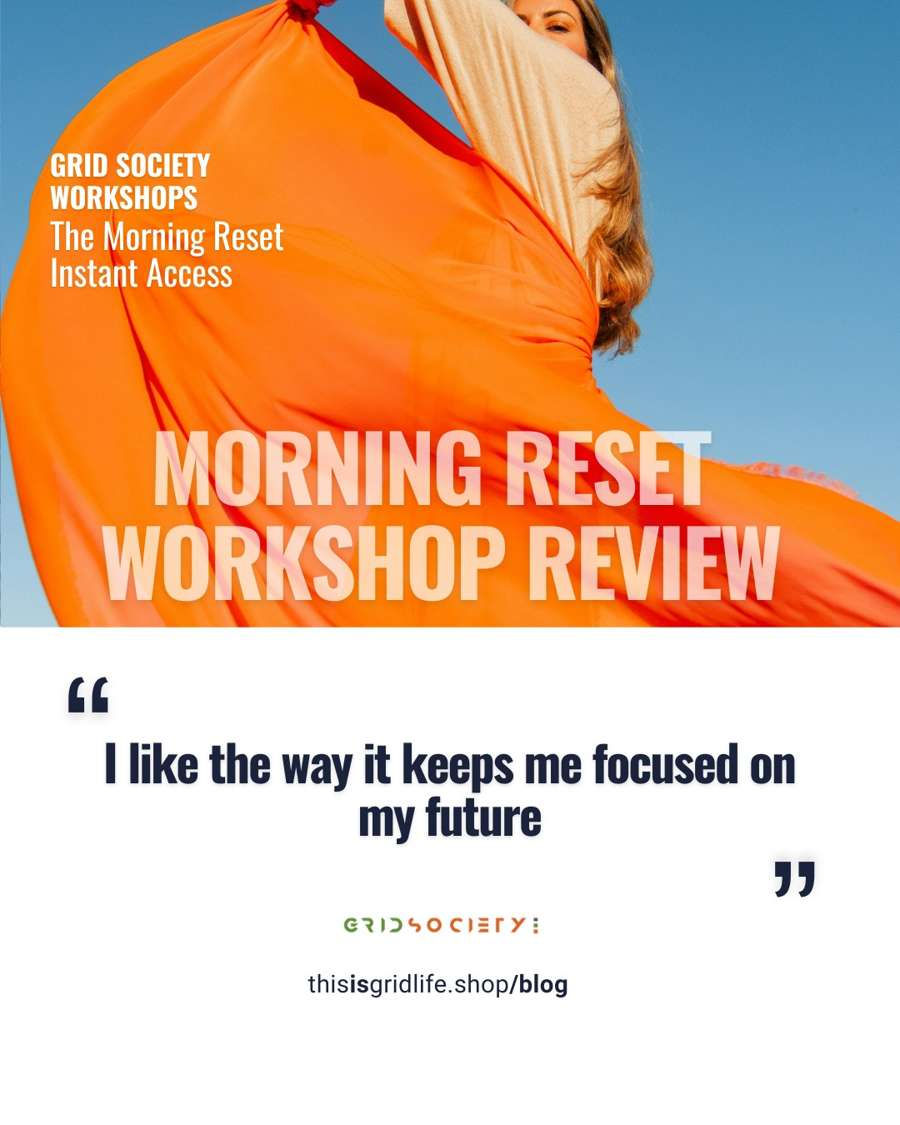
These reviews come from individuals, professionals, and workshop participants who have used Grid Society tools in real-life settings.
They show how structured thinking moves people from mental overload into clarity, direction, and confident action.

Grid Society Dubai workshop reviews showing participant feedback on clear thinking and mindset tools 
Common questions people ask
How do I use the Grid Society Framework™ for personal development?
How do I organise my thoughts without overthinking?
What is a structured thinking framework for personal development?
Are there practical tools to help with decision-making and clarity?
Who are Grid Society?
Grid Society is a structured thinking concept built around the Grid Society Framework™, designed to help individuals move from mental overload into clear direction.
Through workshops and downloadable workbooks, Grid Society provides practical ways to organise your thinking, make decisions, and move forward with clarity.
The framework has been applied in workshops across the UK, including London, and internationally in Dubai, supporting individuals, professionals, counsellors, and organisations in real-life settings.
All tools are built around a clear, repeatable framework designed to be used in real situations, not just understood.
© Grid Society™ 2025. All frameworks, concepts, terms, workshop names, images, and designs are the intellectual property of Grid Society™. Reuse, adaptation, or reproduction without written consent is strictly prohibited.
Referencing or sharing this content, including on social media, is welcomed and appreciated with clear credit to Grid Society™.
The Universal Grid™, Grey Grid™, Green Grid™, and Orange Grid™ are original concepts created exclusively by Grid Society™ and form part of its structured framework for recognising, organising, and acting on your thinking.


Comments